Jammu, Jan 25: Brij Lal Bhat, a social worker from the Kashmiri Pandit community who was honoured with the Padma Shri under the “Unsung Heroes” category on Sunday, said that signs of hope and positivity are now becoming visible in Kashmir after years of violence and unrest. He emphasized the need for a well-structured policy to facilitate the return of the Kashmiri Pandit community to the Valley.
Bhat, a former bureaucrat, expressed optimism that with balanced policies and sustained efforts, Kashmir could once again regain its identity as a land of harmony and coexistence.
“I have served in Kashmir and witnessed some of the most difficult periods marked by militancy and fear. I saw the darkness grow over the years, and today I also see encouraging signs of positivity emerging,” he told PTI Videos shortly after the announcement of the national honour.
Reflecting on his journey, Bhat said that during his time in government service, he felt limited in what he could contribute. “After retirement, when I was free from official responsibilities, I decided to remain in Kashmir and do my part in addressing the challenges and mistakes of the past,” he added.
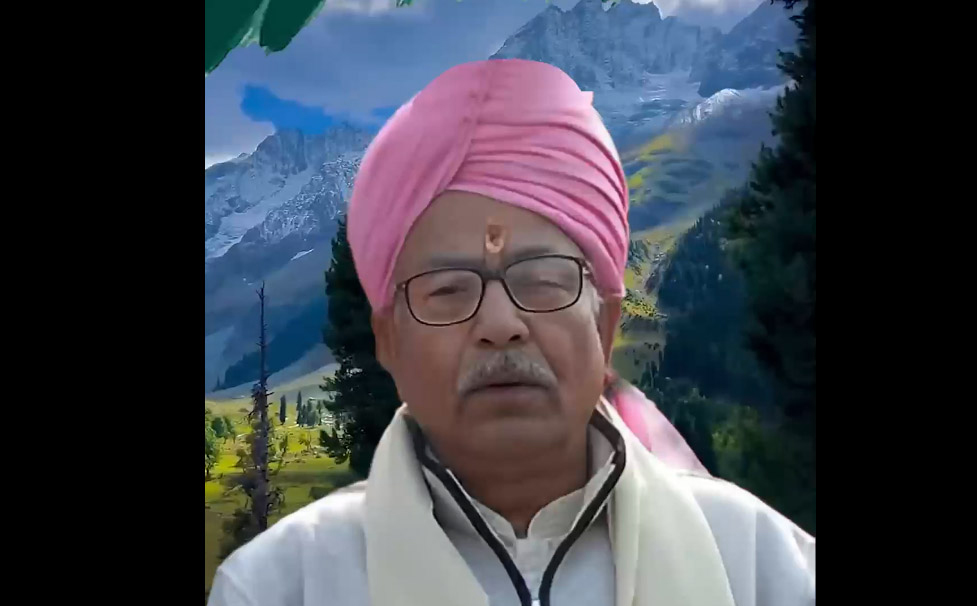
Welcoming the honour, Bhat said he views the award not as a personal accomplishment, but as a recognition of the work being carried out by the institutions he is associated with Sri Ramakrishna Mission Ashram and Vivekananda Kendra in Nagdandi.
He explained that while the organisations, which have nearly 900 branches across India, primarily focus on nation-building and character development, an additional objective was introduced in Kashmir: supporting the return and rehabilitation of displaced Kashmiri Pandits.
Bhat said the organisations are actively working to rebuild social connections by celebrating traditional festivals, organising youth interactions, and hosting conferences aimed at strengthening community harmony.
“My role is to bring together young people from different communities and encourage their participation in civil society initiatives. I believe we have achieved meaningful progress in this direction,” he said, adding that national-level programs are also being conducted to unite youth from various districts on a common platform.
He further stated that both the Central Government and the Jammu and Kashmir administration are collaborating with various groups and NGOs to create positive change in the region. “I believe the current leadership has created an environment where Kashmir can gradually regain its old spirit of harmony and prosperity. We are moving steadily in that direction,” he said.
According to Bhat, the ultimate goal is to replace violence with education and constructive opportunities. “That transformation is already visible. Today, young individuals from Jammu and Kashmir are serving as district development commissioners in several districts,” he noted.
He also emphasized that lasting peace and normalcy in Kashmir would require active efforts from the majority community to welcome and support members of minority communities, fostering trust, inclusion, and coexistence.
Bhat highlighted that nearly 6,000 Kashmiri Pandits employed in the Valley under the Prime Minister’s employment package have been able to continue there largely because of the support and cooperation extended by local youth from the majority community and their families.
“I spend at least nine months every year in Kashmir, and the situation on the ground today reflects a growing realization among people that violence has brought no benefit to anyone,” Bhat said. “We must come together, move beyond the pain of the past, and work collectively to rebuild the spirit and glory of old Kashmir.”
However, he stressed that goodwill and individual efforts alone would not be enough to encourage the return of those who left the Valley over three decades ago. According to him, a clear and comprehensive policy framework from both the Government of India and the Jammu and Kashmir administration is essential.
Bhat emphasized that such a policy should be developed through consultation with the displaced community, allowing room for suggestions and improvements, while also ensuring that the majority community is taken into confidence.
“When there is a balanced and widely accepted policy that addresses the concerns of both the displaced families and the local majority community, only then can lasting peace and normalcy truly return to Kashmir,” he said.